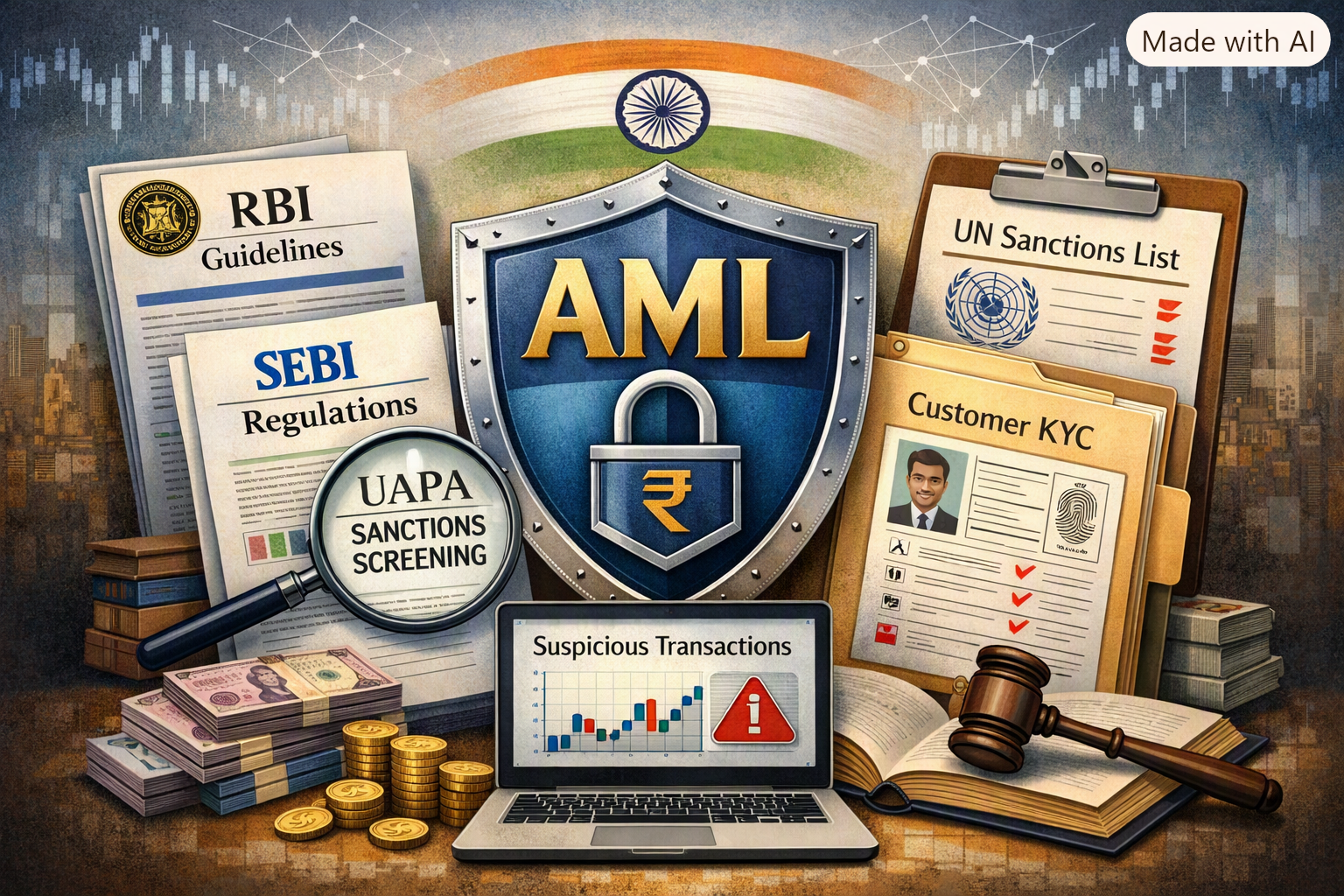
Indian authorities have issued fresh updates relating to terrorist designations and United Nations Security Council sanctions-list implementation, reinforcing the importance of sanctions screening for regulated financial institutions.
On October 1, 2026, an official Indian regulatory listing recorded an update under Section 35 of the Unlawful Activities (Prevention) Act, 1967, involving the designation of one entity as a terrorist organisation.
The same date also saw an update under Section 51A of the UAPA relating to the UN Security Council’s ISIL and Al-Qaida sanctions list.
What Section 51A means for financial institutions
Section 51A of the UAPA creates obligations relating to designated individuals and entities.
For regulated financial institutions, sanctions-list implementation is an important component of customer screening and financial-crime controls.
The RBI’s KYC framework requires regulated entities to comply with applicable obligations relating to designated persons and entities.
Why sanctions screening matters
Banks and financial institutions need processes capable of identifying customers and relevant parties who appear on applicable sanctions and terrorist-designation lists.
Screening should cover relevant customer and account information and should be supported by procedures for investigating potential matches.
A possible match should be assessed carefully using available identifying information rather than automatically treated as a confirmed match.
KYC and sanctions are connected
The quality of KYC information directly affects sanctions-screening effectiveness.
Accurate customer names, dates of birth, addresses and other identifying information can help compliance analysts determine whether a potential match represents the actual designated party.
Weak or outdated customer information can make sanctions screening more difficult and increase both false positives and false negatives.
Importance of timely list updates
Sanctions lists can change frequently.
A financial institution that does not update its screening data promptly can potentially miss a newly designated individual or entity.
For this reason, compliance teams should maintain procedures for receiving regulatory updates, incorporating them into screening systems and, where appropriate, rescreening relevant customer populations.
What AML teams should review
Indian regulated entities should ensure their sanctions-screening framework reflects current applicable UAPA and UN Security Council requirements.
Teams should also verify that escalation procedures are clearly documented.
Where a potential match is identified, appropriate investigation and reporting or freezing procedures should be followed in accordance with applicable law and regulatory directions.
Why this matters for KYC professionals
The development demonstrates that sanctions and terrorist-financing controls remain an active part of India’s AML framework.
KYC analysts are often among the first compliance professionals to identify potential sanctions or terrorist-designation matches.
Strong customer identification, accurate screening and clear escalation procedures are therefore essential.
Key takeaways
- India recorded a Section 35 UAPA terrorist-organisation designation on October 1.
- An additional update concerned the UN Security Council’s ISIL and Al-Qaida sanctions list.
- Section 51A requirements are relevant to regulated financial institutions.
- Accurate KYC data supports effective sanctions screening.
- Screening systems should be updated promptly when lists change.
- Potential matches require appropriate investigation and escalation.
Financial institutions should continue monitoring official UAPA, UNSC and RBI communications to ensure their sanctions and AML controls remain aligned with current requirements.